
 Contacto
 Como comprar
Entrega
Guia de compras
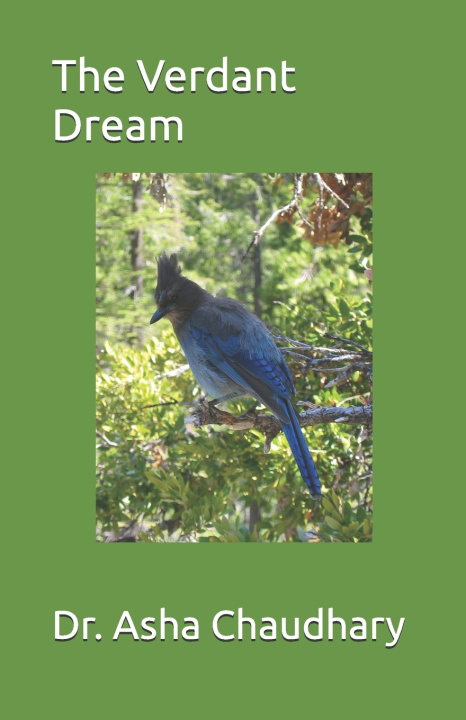
The Verdant Dream
 Inglês
 22 b
22 b
 Novo
Novo
Até 30 dias para devoluções

The novel follows Ratna, a professor who returns to her family home in Delhi after nearly fifteen or sixteen years of estrangement. She has been summoned because her father, Papa Ji, lies critically ill in hospital, apparently close to death. Her journey from Lucknow to Delhi is therefore not merely a journey across physical distance; it is a return to a past she has spent years trying to bury.
Once the cherished only daughter of an affluent and close-knit family, Ratna grew up with the warmth and security of a home in which she believed her place was unquestionable. That sense of belonging was shattered when she married Avijit in a court marriage, a man from outside her caste and community. Her brother Prem had also married outside the community, yet his decision was eventually accepted. Ratna's choice, however, was treated as a far greater offence. For years, she was denied access to the parents she loved and to the family in which she had once been deeply rooted.
Her return comes at the most vulnerable moment of her father's life. At the hospital, she finds Papa Ji unconscious, connected to machines and incapable of speaking to her. His physical helplessness mirrors her own emotional helplessness. After fifteen years of separation, she has finally been permitted to come close to him but only when he is no longer capable of telling her whether he wants her there.
When Ratna returns to the family home, another shock awaits her. The house and landscape of her childhood have been transformed. The spacious ancestral property and open gardens she remembers have disappeared beneath the expansion of the modern city. The disappearance of that landscape becomes a metaphor for the disappearance of the family world she once knew. Yet Ratna's memories refuse to disappear.
She soon realises that her return is not viewed simply as the return of a daughter or sister. Her presence raises another fear: inheritance. While her father remains critically ill, her sisters-in-law begin discussing jewellery, property, and the possibility of obtaining Ratna's signatures. Their conversations expose the ugly transformation that has taken place within the family. Relationships Ratna remembers as sacred have become entangled with calculations of ownership and financial advantage.
The contrast is painful: Ratna has returned carrying memories of love, while others are watching her return through the lens of property.
At the heart of the novel, Ratna's story exposes the double standards of family honour, caste, patriarchy, and inheritance, while also examining the complicated loyalties that allow such structures to survive.
Yet The Verdant Dream ultimately reaches beyond the question of family and property. The title refers to Papa Ji's larger dream of a green, flourishing, balanced, and harmonious world. On this Earth, moving in its natural and balanced orbit around the Sun, he cherished a simple yet profound vision of preserving the delicate relationship between the Earth and the sky. He pursued this vision despite the apparent smallness of his efforts-like an ant attempting to climb a mighty mountain or a tiny squirrel carrying pebbles one by one, as though trying to build a bridge across the sea.
When Ratna ultimately chooses to accept the will made in her favour, she does so not merely as an act of inheritance, but in the hope of fulfilling her father's unfinished dream. What she inherits, therefore, is more than property. She inherits a responsibility-a vision that she must carry forward.
Thus, "The Verdant Dream" is ultimately the story of a daughter returning to a fractured family, confronting the wounds of caste, honour, patriarchy, and inheritance, and discovering that her father's greatest legacy is not what he leaves behind, but the dream he entrusts to her.


Sobre o livro
Inglês
Categorias

Ofereça este livro hoje
É fácil
1 Adicione ao carrinho e escolha Entregar como presente ao finalizar a compra 2 Receberá um vale 3 O livro chegará ao endereço do destinatárioOlá! Sou o Libroamiko, o seu conselheiro de livros.
Como posso ajudar?