
 Contacto
 Como comprar
Entrega
Guia de compras
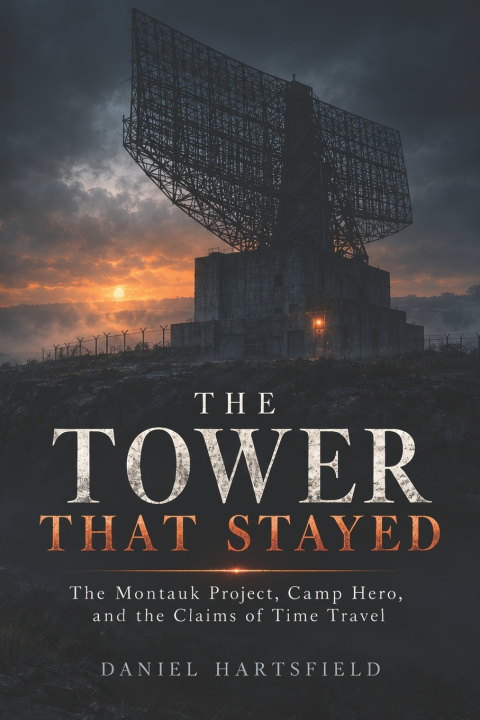
The Tower That Stayed
The Montauk Project, Camp Hero, and the Claims of Time Travel
 Inglês
 41 b
41 b
 Novo
Novo
Até 30 dias para devoluções

The military base was real. The radar tower still stands. But what evidence supports the extraordinary experiments allegedly conducted beneath it?
At the eastern end of Long Island, an enormous Cold War radar antenna rises above the former Montauk Air Force Station. Built to detect approaching aircraft, the installation eventually became the center of one of America's most enduring conspiracy narratives: the Montauk Project.
The allegations describe secret mind-control experiments, psychic technology, underground laboratories, human experimentation, and attempts to manipulate time itself.
But how much of that story can be established through historical evidence?
The Tower That Stayed is an investigative nonfiction examination of Camp Hero, the Montauk Project conspiracy, and the difficult boundary between documented military history and extraordinary claims.
Daniel Hartsfield reconstructs the installation's transformation from a World War II coastal-defense position into a Cold War radar station. Through military history, technical documentation, historical accounts, and surviving records, he examines the actual purpose of the AN/FPS-35 radar and the circumstances surrounding the station's closure.
The investigation then turns to the claims that made Montauk famous.
Beginning with the 1992 publication that brought the Montauk Project narrative into wider circulation, the book examines Preston Nichols's accounts, Duncan Cameron's alleged involvement, recovered-memory testimony, and the difficulties of distinguishing independent corroboration from stories repeated through a shared source.
The inquiry explores the alleged Montauk Chair, claims of electromagnetic mind control, supposed underground installations, the accounts involving human subjects, and the disputed events associated with August 12, 1983.
Each subject raises a central question: what evidence would be necessary to establish that the alleged activity actually occurred?
The investigation also examines the Philadelphia Experiment narrative and compares Montauk's allegations with documented government research, including MKULTRA and Cold War remote-viewing programs. These historical precedents demonstrate that secret and unconventional research existed without independently verifying the extraordinary operations attributed to Camp Hero.
Technical explanations, military chronology, questions of witness reliability, and the development of the Montauk legend are brought together in a careful examination of what the surviving record can-and cannot-establish.
Rather than presenting speculation as historical fact or dismissing every unresolved question, Hartsfield separates documented events, retrospective testimony, technical possibility, and unsubstantiated allegations.
Including a detailed historical timeline, key-people glossary, and source index, The Tower That Stayed offers readers a structured investigation into Cold War military secrecy, disputed scientific claims, and the enduring cultural power of the Montauk Project.
The tower has survived for decades. The question is whether the story attached to it can survive the same examination.
For readers interested in historical mysteries, conspiracy investigations, secret government programs, and the documented history behind extraordinary claims, this book offers a grounded examination of one of America's most recognizable military legends.


Sobre o livro
Inglês

Ofereça este livro hoje
É fácil
1 Adicione ao carrinho e escolha Entregar como presente ao finalizar a compra 2 Receberá um vale 3 O livro chegará ao endereço do destinatárioOlá! Sou o Libroamiko, o seu conselheiro de livros.
Como posso ajudar?