
 Contacto
 Como comprar
Entrega
Guia de compras
 Inglês
 36 b
36 b
 Novo
Novo
Até 30 dias para devoluções

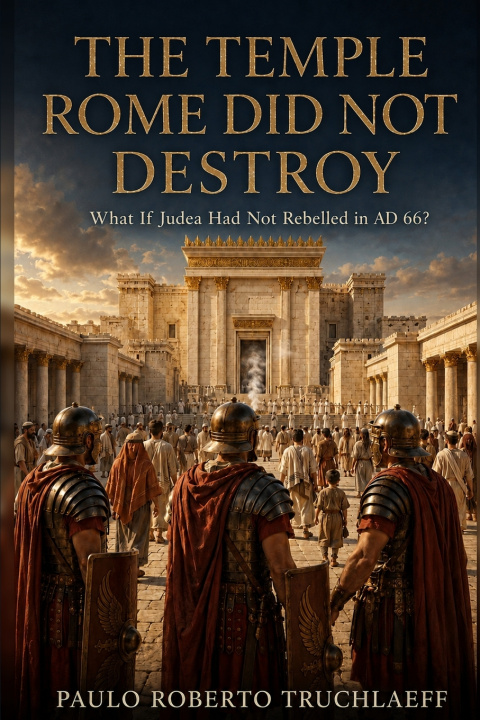
What if the revolt that destroyed Jerusalem had never begun?
In AD 66, Roman abuses pushed Judea toward rebellion. In the history we know, the conflict ended four years later with the fall of Jerusalem, the destruction of the Second Temple, and consequences that reshaped Judaism, Christianity, Islam, and the modern world.
But war was not inevitable.
This alternate history begins with one plausible decision: priests, aristocrats, and moderate citizens regain control of Jerusalem, restore the sacrifice offered for the emperor, and convince Rome that Judea has rejected a corrupt governor-not the Empire itself.
From that small divergence, an entirely different world emerges.
The Temple remains the living center of Judaism. Priests continue to serve beside rabbis. Christianity must define its new covenant while the old covenant remains visibly alive. Constantine, the Islamic conquerors, the Crusaders, and the modern world all encounter a Jerusalem that was never reduced to ruins.
Would the theology that portrayed the Jews as rejected by God still have developed? Would centuries of expulsions, persecutions, and pogroms have followed the same path? Could the Holocaust and the Arab-Israeli conflict have arisen under radically different historical conditions?
The Temple Rome Did Not Destroy follows the consequences across two millennia while avoiding the easy promise of a peaceful world. It is a work of alternate history about Judaism, Christianity, empire, identity, and the immense future that can sometimes be preserved by one unpopular act of prudence.
```


Sobre o livro
Inglês

Ofereça este livro hoje
É fácil
1 Adicione ao carrinho e escolha Entregar como presente ao finalizar a compra 2 Receberá um vale 3 O livro chegará ao endereço do destinatárioOlá! Sou o Libroamiko, o seu conselheiro de livros.
Como posso ajudar?