
 Contacto
 Como comprar
Entrega
Guia de compras
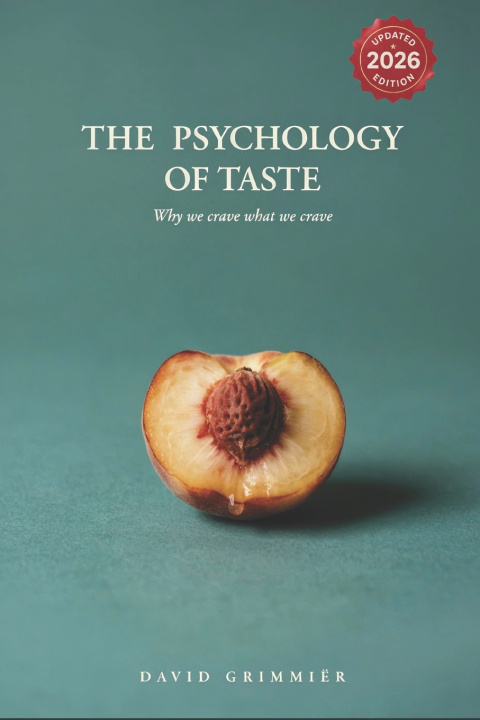
The Psychology of Taste
Why We Crave What We Crave, and How Five Sensations Built Human Culture
 Inglês
 40 b
40 b
 Novo
Novo
Até 30 dias para devoluções

Your tongue can detect five things. Everything else is assembled.
Sweet. Salty. Sour. Bitter. Umami. That is the entire vocabulary of human taste - five channels, reporting from a few thousand cells that live about a fortnight and are then thrown away and rebuilt.
So where does the rest of it come from? The peach-ness of a peach, the difference between coffee and tea, the reason a smell can put you back in a kitchen you left thirty years ago?
Almost none of it is happening where you think it is.
In The Psychology of Taste, David Grimmiër follows the science of flavour from the receptors on your tongue to the table you eat at - and finds that most of what we call taste is built somewhere else entirely: in the nose, working backwards; in the memory; in the price on the label; in the company you are keeping.
Inside
- The tongue map you were taught at school entered the world's textbooks through a graphing error in 1942 - and stayed there for the rest of the century
- Nobody knows what percentage of taste is really smell. The famous number has no study behind it, and this book shows you how to trace a statistic to its source
- Fat, tasted in isolation, is disgusting - what we love about it is texture, aroma and calories, not taste
- Cats cannot taste sweetness at all. Dolphins have lost sweet, umami and ten separate bitter genes. Hummingbirds rebuilt a sweet detector out of an umami receptor
- Why one bout of food poisoning can end your relationship with a sauce for a decade, no matter what you believe
- What actually happens when taste goes - and what the pandemic taught us about a sense almost nobody studied
A different kind of science book
This is a book that tells you how many people were in the study. When a famous finding rests on twenty undergraduates in a soundproof booth, you will read the word twenty. When a beloved experiment turns out not to replicate, you will be told. When the evidence is genuinely unsettled, the argument is shown rather than resolved.
The result is a book that leaves you not only knowing more about your own mouth, but better at telling a finding from a story about a finding.
For readers of Mary Roach, Ed Yong, Bee Wilson and Charles Spence - and for anyone who has ever wondered why they hate coriander, why aeroplane food tastes wrong, or why their grandmother's kitchen is the most vivid room in their memory.


Sobre o livro
Inglês

Ofereça este livro hoje
É fácil
1 Adicione ao carrinho e escolha Entregar como presente ao finalizar a compra 2 Receberá um vale 3 O livro chegará ao endereço do destinatárioOlá! Sou o Libroamiko, o seu conselheiro de livros.
Como posso ajudar?