
 Contacto
 Como comprar
Entrega
Guia de compras
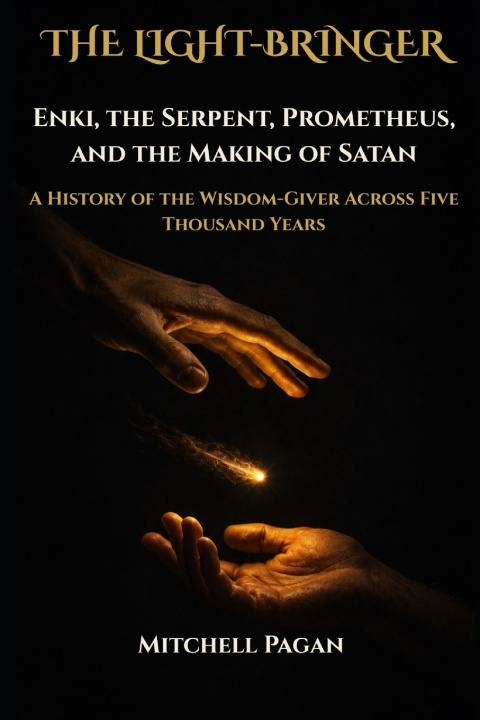
THE LIGHT-BRINGER
Enki, the Serpent, Prometheus, and the Making of Satan A History of the Wisdom-Giver Across Five Thousand Years
 Inglês
 40 b
40 b
 Novo
Novo
Até 30 dias para devoluções

The devil's most famous name is a Latin word for the planet Venus.
That is not the strangest thing in this book. It is the entry point.
A figure appears in the foundational literature of nearly every ancient civilization from Sumer to Rome.
He is never the supreme god.
What he does is always the same: he gives human beings knowledge they were not supposed to have, against the wishes of a higher power. And across three thousand years, the verdict on that act reverses completely.
• Enki of Eridu proposed humanity's creation, gave it the arts of civilization, and broke a binding divine oath to save it from the flood - and was never punished for any of it
• The serpent of Eden made two statements that the Book of Genesis then confirms in its own words, including in the mouth of God
• Prometheus gave fire, writing, medicine and metallurgy - and was chained to a rock by a god the play presents as a recent usurper
• Azazel taught the identical catalogue of technologies and was buried under stones in the desert, with "all sin" ascribed to him
• Satan was assembled, centuries later, from five unrelated texts - a prosecutor, a snake, a rebel angel, a Babylonian king and a Tyrian prince - none of which refers to any of the others
The act never changes. Only the sentence does. And the reason is not that anyone discovered something new about the wisdom-giver's character - it is that a theology of divine councils gave way to a theology of one God and one enemy, and the position he had occupied simply ceased to exist.
This is comparative history, not advocacy. It does not argue that the serpent was right, and it says plainly where the popular claims fail. What it does show - with the texts on the table in Sumerian, Hebrew, Greek and Latin - is that the being now known as the enemy of all creation began as the god who gave us everything we know.
23 chapters. Six parts. Five thousand years.


Sobre o livro
Inglês
Categorias

Ofereça este livro hoje
É fácil
1 Adicione ao carrinho e escolha Entregar como presente ao finalizar a compra 2 Receberá um vale 3 O livro chegará ao endereço do destinatárioOlá! Sou o Libroamiko, o seu conselheiro de livros.
Como posso ajudar?