
 Contacto
 Como comprar
Entrega
Guia de compras
 Inglês
 56 b
56 b
 Novo
Novo
Até 30 dias para devoluções

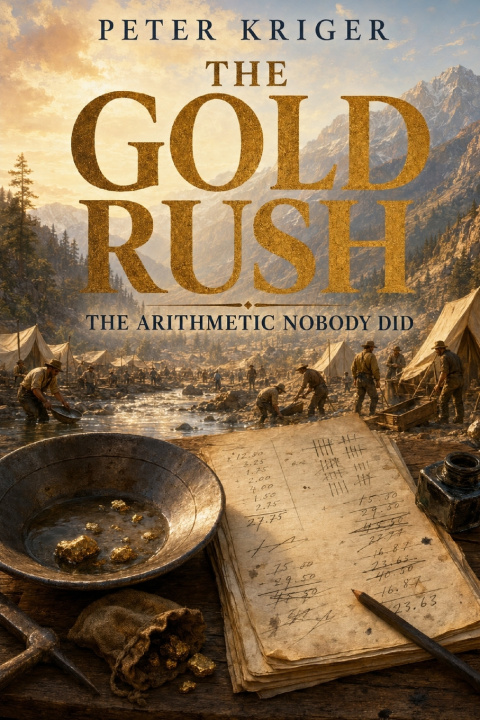
In January of 1848 a carpenter building a sawmill on the American River noticed something bright lodged in the tailrace. Within two years a hundred thousand people had crossed oceans, isthmuses, and deserts in order to stand in cold water and shake gravel in a pan.
We file this under adventure. It belongs under experiment.
Placer gold was the only prize in human history that paid out grain by grain, on an unpredictable schedule, to a single person with no capital beyond a shovel and a strong back - and could then be sold at a price fixed by statute that no glut on earth was permitted to lower. Nothing else has ever combined those properties. Nothing else has ever needed to. That combination is the recipe for compulsive pursuit, and the nineteenth century supplied the remaining ingredients: steamships, the penny press, the telegraph, and, for the first time in the human record, large populations legally free to walk away from the place they were born.
This book takes the machine apart. It asks how much gold was actually worth measured against a day of ordinary labor, and how quickly the average digger's earnings sank back to the wage he had left behind. It asks why five thousand years of treasured gold produced no stampede until the century of the steam press, and what the Portuguese Crown did in Brazil to make certain one did not happen. It asks why almost every fortune we can name from the rush belonged to someone selling wheelbarrows, denim, chocolate, hardware, or banking services - and why "sell shovels" is nonetheless worse advice than it sounds. It counts the bill and names who paid it: a Native population reduced by four fifths in twenty years, the taxed foreigner, the farmland buried under mining debris, the mercury still moving through the Delta in the fish of the present day.
And it asks the two questions everyone eventually arrives at. Is there any findable gold left, anywhere, and what exactly would have to be true for another rush to happen? The answers turn out to be more interesting than yes or no: the metal is not running out, but the kind of deposit a person can find alone has been gone for a century, which is why the last true rushes now occur only where law is thin. Meanwhile the appetite itself found cheaper accommodation. It moved into a creek that fits in a pocket, borrows the entire vocabulary of mining, never freezes over in winter, and can be refreshed with a thumb.
A history of the loudest financial fever of the modern era, and of the quiet sum that nobody in it ever bothered to work out.
Keywords: gold rush, economic history, behavioral economics, mining, risk and reward, California, nineteenth century


Sobre o livro
Inglês
Categorias

Ofereça este livro hoje
É fácil
1 Adicione ao carrinho e escolha Entregar como presente ao finalizar a compra 2 Receberá um vale 3 O livro chegará ao endereço do destinatárioOlá! Sou o Libroamiko, o seu conselheiro de livros.
Como posso ajudar?