
Faça parte de uma comunidade de amantes de livros de todo o mundo e tenha acesso a uma série de benefícios.
Crie uma conta gratuitamente
Correio DHL 7.99 €
Correio DPD 4.49 €
Ponto DPD 3.99 €
Correio GLS 5.49 €
Correio MRW 5.49 €
Ponto GLS 4.49 €
 Contacto
 Como comprar
Ajuda
Entrega
Correio DHL 7.99 €
Correio DPD 4.49 €
Ponto DPD 3.99 €
Correio GLS 5.49 €
Correio MRW 5.49 €
Ponto GLS 4.49 €
Guia de compras
A minha conta
▸
Vazio :-(
0
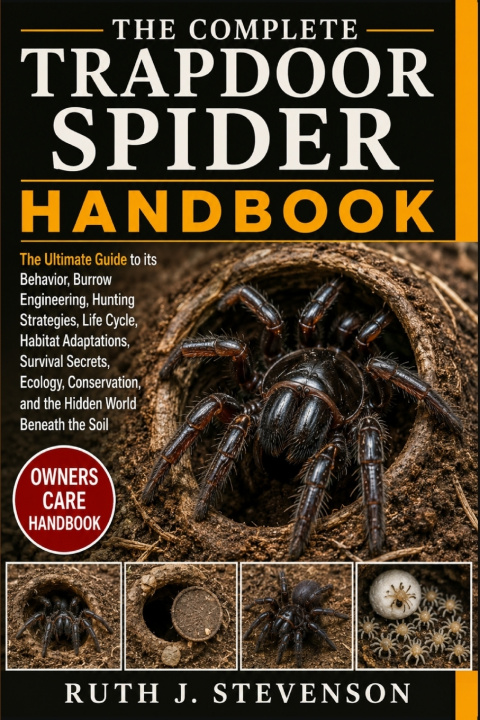
THE COMPLETE TRAPDOOR SPIDER HANDBOOK
The Ultimate Guide to its Behavior, Burrow Engineering, Hunting Strategies, Life Cycle, Habitat Adaptations, Survival Secrets, Ecology, Conservation, and the Hidden World Beneath the Soil
Língua
 Inglês
Inglês
Livro
Capa mole
Introduction to the Trapdoor SpiderOverview of Trapdoor SpidersTrapdoor spiders are among the most r...
Descrição completa
Código Libristo: 53017273
?
 45 b
45 b
 Novo
Novo
45 b
Novo
18.37
€
Armazenamento externo
Envio em 14-21 dias
Até 30 dias para devoluções

Introduction to the Trapdoor Spider
Overview of Trapdoor Spiders
Trapdoor spiders are among the most remarkable and secretive spiders in the natural world, known for their hidden burrows, camouflaged doors, patient hunting style, and mysterious underground lifestyle. Unlike many spiders that spin visible webs in corners, gardens, forests, or open spaces, trapdoor spiders spend most of their lives concealed beneath the surface of the soil. Their world is not built in the open air but inside carefully constructed tunnels that serve as homes, hunting stations, shelters, and protective retreats. This hidden way of life makes them difficult to observe, yet it also makes them one of the most fascinating groups of spiders for anyone interested in animal behavior, survival strategies, and natural engineering.The name "trapdoor spider" comes from the special burrow entrance used by many species. This entrance is often covered by a hinged door made from soil, silk, plant material, and other natural debris. When closed, the door blends so perfectly with the surrounding ground that it can be almost impossible to detect. Beneath this door, the spider waits silently for passing prey. When an insect or small invertebrate comes close enough, the spider senses vibrations through the ground, pushes the door open, strikes quickly, and pulls the prey into the burrow. This hunting method depends on patience, precision, camouflage, and lightning-fast movement.
Trapdoor spiders are usually robust, strong-bodied spiders with powerful legs and sturdy fangs suited for close-range ambush hunting. They do not chase prey across long distances, nor do they rely on large capture webs. Instead, they use their burrows as carefully positioned hunting bases. Their bodies are well adapted to a life spent digging, waiting, sensing movement, and surviving in protected underground chambers. Many species are nocturnal, becoming more active at night when insects and other small animals move across the soil surface. During the day, they usually remain hidden, conserving energy and avoiding predators.
Understanding trapdoor spiders requires appreciating their quiet and highly specialized lifestyle. They are not aggressive animals seeking contact with people, and most encounters happen only when a burrow is disturbed or when males wander during mating periods. Their importance lies not in visibility but in their ecological role and extraordinary adaptations. They control insect populations, contribute to soil-based food webs, and demonstrate how survival can be achieved through patience, concealment, and careful environmental design. Their hidden lives remind readers that some of nature's most impressive animals are not always the most obvious ones.
History of Discovery and Classification
The history of trapdoor spider discovery is closely connected to the broader study of spiders and early natural history. For many years, these spiders remained poorly understood because of their secretive habits. Unlike web-building spiders that are easy to find and observe, trapdoor spiders spend most of their time underground, often in burrows that are extremely well camouflaged. Early observers sometimes discovered them by chance while digging, turning soil, moving stones, or noticing the sudden movement of a hidden door. These accidental discoveries gradually revealed that many spiders were living beneath the ground in structures far more complex than people first imagined.
Atriz
&
Poliglota
EWA KASP
para
Reproduzir vídeo


A Libristo tem a maior seleção de literatura estrangeira. É por isso que compro os meus livros aqui.
Sobre o livro
Nome completo
THE COMPLETE TRAPDOOR SPIDER HANDBOOK
Autor
RUTH J. STEVENSON
Língua
Inglês
Inglês
Encadernação
Livro - Capa mole
Data de emissão
2026
Número de páginas
172
EAN
9798184266558
Código Libristo
53017273
Editoras
Independently published
Peso
240
Dimensões
152 x 229 x 9
Categorias
Saúde, relações & desenvolvimento pessoal
>
Família & saúde
>
Lidar com problemas pessoais
>
Lidar com a morte e a perda

Ofereça este livro hoje
É fácil
1 Adicione ao carrinho e escolha Entregar como presente ao finalizar a compra 2 Receberá um vale 3 O livro chegará ao endereço do destinatário
Conselheiro de livros Libroamiko
Ao utilizar este chat, está a comunicar com inteligência artificial generativa. Ao utilizá-lo, concorda também com o processamento de dados pessoais.
Olá! Sou o Libroamiko, o seu conselheiro de livros.
Como posso ajudar?
Olá, sou o Libroamiko, posso ajudar?