
 Contacto
 Como comprar
Entrega
Guia de compras
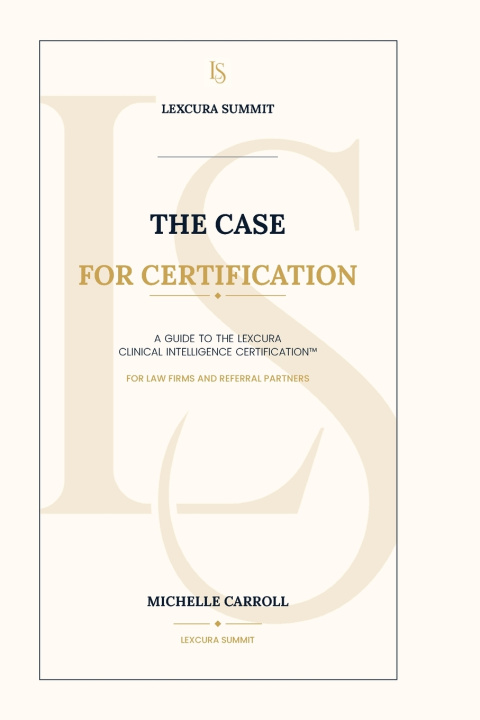
The Case for Certification
 Inglês
 62 b
62 b
 Em breve
 Novo
Novo
Até 30 dias para devoluções

For law firms and referral partners, retaining a medical-legal analyst has always required a certain amount of blind trust - a report arrives, organized and confident, but there's rarely a reliable way to know whether the analysis behind it was rigorous or just persuasive.
The Case for Certification explains the credential built to close that gap. It introduces the Lexcura Clinical Intelligence Model¿, a structured seven-pillar methodology for reconstructing a patient's clinical story before any legal theory is built on top of it, and the Lexcura Certified Clinical Intelligence Analyst¿ (LCCIA¿) designation that verifies an analyst has mastered it.
This guide is written specifically for the people who rely on that work rather than perform it: hiring partners, general counsel, litigation support directors, and referral partners. It does not teach the underlying methodology - it answers the questions those decision-makers actually ask before extending trust to an outside analyst:
What does this credential certify, and what does it not certify?
Why does a consistent methodology matter more in medical-legal analysis than in most fields?
What separates a certified analyst from an uncertified one?
What does a candidate actually go through to earn the credential?
How should a firm evaluate, engage, and build this credential into its own standards?
Written by Michelle Carroll, founder of Lexcura Summit and originator of the Clinical Intelligence¿ discipline, this guide gives legal teams a clear, defensible way to evaluate the analysts they rely on - before the case, not during cross-examination.


Sobre o livro
Inglês

Ofereça este livro hoje
É fácil
1 Adicione ao carrinho e escolha Entregar como presente ao finalizar a compra 2 Receberá um vale 3 O livro chegará ao endereço do destinatárioOlá! Sou o Libroamiko, o seu conselheiro de livros.
Como posso ajudar?