
 Contacto
 Como comprar
Entrega
Guia de compras
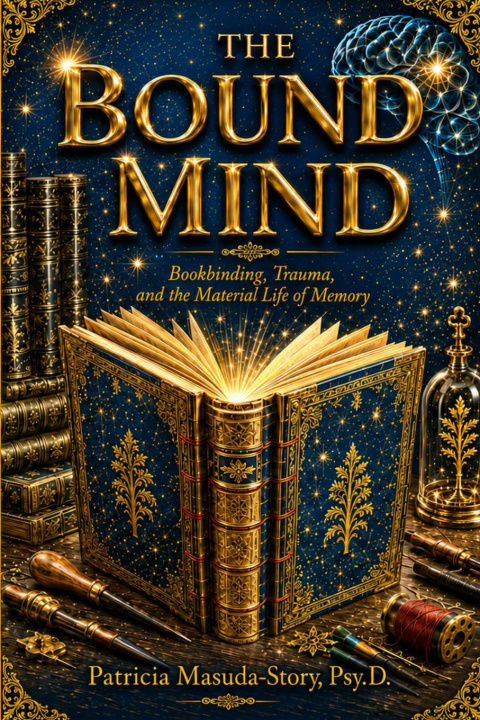
The Bound Mind
Bookbinding, Trauma, & The Material Life of Memory
 Inglês
 42 b
42 b
 Novo
Novo
Até 30 dias para devoluções

A cracked spine. A loosened hinge. A page that remembers the hand that turned it. A mind that has survived trauma and still searches for the conditions of return.
The Bound Mind brings trauma psychology into an unexpected conversation with the material life of books. Patricia Masuda-Story, Psy.D., Clinical Psychologist, enters the world of bookbinding, conservation, archives, marginalia, sacred texts, forbidden volumes, damaged paper, and visible restoration to explore what happens when memory survives, but the structure holding it has been injured.
A bound book is a body of memory. It is made from folds, thread, boards, cover, spine, sequence, touch, pressure, and repair. It can look intact while its inner architecture is failing. It can be damaged by neglect, harmed again by careless rescue, or preserved through careful intervention that respects both structure and history. In that material world, Dr. Story finds a powerful language for the human mind after trauma: the fractured self, the protected interior, the concealed wound, the record that preserves a life, the scar that remains visible because truth deserves a body.
Moving through clinical psychology, cognitive science, book history, conservation ethics, archive studies, and the material culture of memory, The Bound Mind asks how experience is held after it has overwhelmed the ordinary systems of selfhood. Traumatic memory can live in the body after danger has passed. A person can look composed while the inner structure remains under strain. A record can preserve suffering while also shape how that suffering is seen. A repair can restore movement and continuity, or it can cover injury too quickly and ask the damaged thing to look untouched.
The chapters unfold like signatures in a handmade book, each one examining a structure of survival: forgetting, externalized memory, the codex, touch, dissociation, containment, marginalia, clinical records, hidden deterioration, bad repair, conservation, archives, sacred books, censorship, and the violence that gathers around dangerous memory. The result is a richly atmospheric work for readers drawn to psychology, trauma, memory, history, rare books, preservation, and the strange tenderness of damaged things that continue to endure.
For psychologists, psychiatrists, therapists, counselors, scholars, archivists, book lovers, and thoughtful general readers, The Bound Mind offers a searching exploration of what it means to hold damage truthfully. It speaks to the clinical mind that recognizes fragmentation, containment, somatic memory, diagnosis, documentation, and the difficult ethics of repair. It also speaks to anyone who has ever loved an old book, carried a private wound, wondered how memory survives, or sensed that what has been damaged may still hold beauty, meaning, and future.
The Bound Mind is a book about trauma, books, preservation, and return: a beautiful and clinically resonant exploration of how wounded things continue to carry truth, and how what has been damaged may still become capable of being opened again.


Sobre o livro
Inglês

Ofereça este livro hoje
É fácil
1 Adicione ao carrinho e escolha Entregar como presente ao finalizar a compra 2 Receberá um vale 3 O livro chegará ao endereço do destinatárioOlá! Sou o Libroamiko, o seu conselheiro de livros.
Como posso ajudar?