
 Contacto
 Como comprar
Entrega
Guia de compras
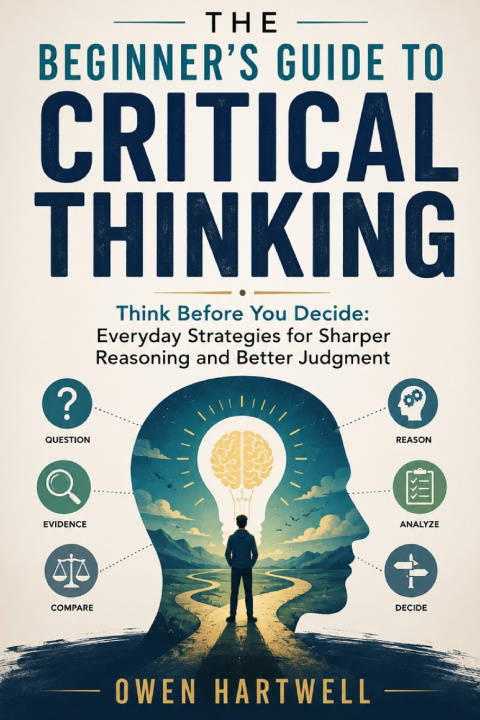
The Beginner's Guide to Critical Thinking
Think Before You Decide: Everyday Strategies for Sharper Reasoning and Better Judgment
 Inglês
 32 b
32 b
 Novo
Novo
Até 30 dias para devoluções

Do you ever wonder whether you're making decisions based on facts-or simply reacting to assumptions, emotions, pressure, or incomplete information?
In a world filled with endless opinions, social media claims, misleading headlines, statistics, persuasive arguments, and AI-generated content, knowing how to think clearly has become an essential everyday skill.
The Beginner's Guide to Critical Thinking offers a practical, accessible introduction to thinking more carefully, evaluating information, and making better judgments without turning every decision into an exhausting analysis.
Inside this book, you'll learn how to:
• Distinguish facts from opinions, assumptions, and beliefs
• Ask better questions before accepting a claim
• Evaluate evidence and recognize weak or misleading support
• Identify unreliable information and misleading statistics
• Evaluate online sources and viral claims
• Understand common cognitive biases and how they influence judgment
• Recognize common logical fallacies
• Manage emotional reactions and mental pressure
• Make more thoughtful decisions using practical frameworks
• Understand probability, risk, uncertainty, and incomplete information
• Adjust your beliefs when credible new evidence appears
• Develop practical habits for clearer everyday thinking
The book also includes practical questions, checklists, examples, and exercises designed to help you apply critical thinking to real-life situations-from evaluating information online and comparing choices to handling disagreements, purchases, opportunities, and important decisions.
You don't need a background in philosophy, psychology, or formal logic to benefit from this book.
The goal isn't to become someone who is always right. It's to become someone who pauses, questions, checks the evidence, considers alternatives, and makes more reasonable judgments.
Pause. Question. Check. Compare. Think. Then decide.
Start building a more deliberate approach to information, decisions, and everyday life.


Sobre o livro
Inglês

Ofereça este livro hoje
É fácil
1 Adicione ao carrinho e escolha Entregar como presente ao finalizar a compra 2 Receberá um vale 3 O livro chegará ao endereço do destinatárioOlá! Sou o Libroamiko, o seu conselheiro de livros.
Como posso ajudar?