Contacto
 Como comprar
Entrega
Guia de compras
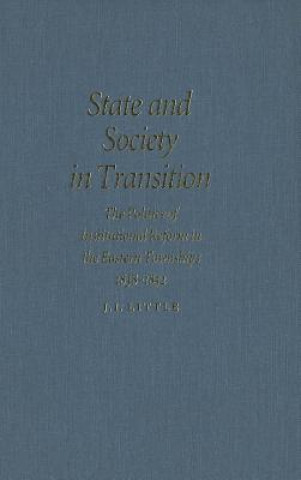
State and Society in Transition
The Politics of Institutional Reform in the Eastern Townships, 1838-1852
 Inglês
 102 b
102 b
Até 30 dias para devoluções
Os clientes também compraram






 /
/
 Capa mole
 34.06
€
34.06
€




Examining the process of state formation as it occurred in the eastern townships of Quebec following the unification of upper and lower Canada, the author argues that institutional reform was not simply imposed by the government but the result of a complex process of interaction between the state and the local community. While past studies look at state formation in the post-Rebellion period largely from the perspective of the central government, this volume focuses on the role the local population played in shaping institutional reforms. Using a variety of documentary sources, including petitions, letters, and reports to the government, Little traces the relationship between community life and government regulation. He reveals that at the same time development of responsible government was leading to increasingly centralized authority at the provincial level, a persistent sense of localism was forcing the state to decentralize its new institutions at the community level. The local population of this largely American-settled corner of Quebec, Little shows, clearly exerted an important influence on the evolution of the education, legal, social welfare and municipal systems. This volume provides a study of state formation in the recently unified province of Canada by taking into account not only the dialectical process between the centre and periphery but also the impact of institutional reform on social and economic development in general.


Sobre o livro
Inglês
Categorias