
 Contacto
 Como comprar
Entrega
Guia de compras
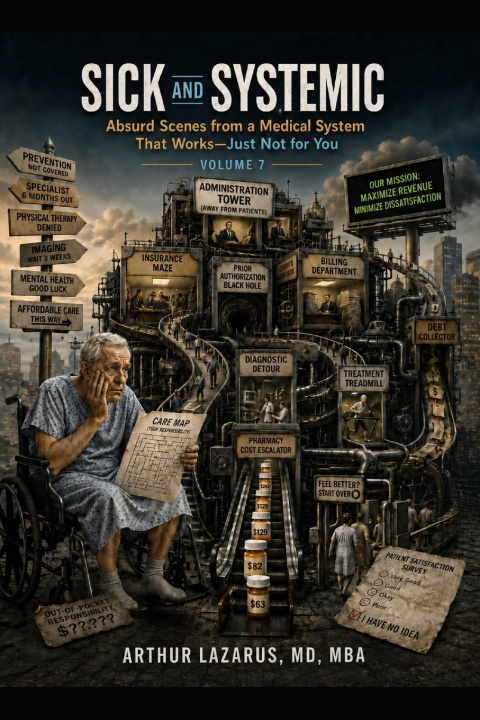
Sick and Systemic
Absurd Scenes from a Medical System That Works-Just Not for You (Volume 7)
 Inglês
 37 b
37 b
 Em breve
 Novo
Novo
Até 30 dias para devoluções

What happens when a healthcare system discourages people from walking outdoors, fabricates a scientific reference, sells medical equipment without teaching anyone how to use it, and abandons patients in the name of resilience?
Welcome to Volume 7 of Sick and Systemic, where American medicine continues to work exactly as designed-just not for the patient at its center.
In these darkly comic scenes, a man needs insurance authorization to step outside. Fabricated citations appear in clinical guidelines. Medical students seem compassionate, but they have not yet learned to listen. An artificial intelligence system changes its diagnosis from one day to the next while remaining equally confident each day. A daughter observes how dementia can become a medical, financial, and legal catastrophe. Employees are monitored by holograms that can discourage snacks but cannot provide time for lunch. An injured patient discovers that his hospital can accept an insurance payment and still pursue his personal injury settlement. And a child who answers a math problem with kindness is corrected for offering comfort instead of the expected answer.
The targets are not patients, families, clinicians, students, therapists, or caregivers. They are the systems surrounding them, which substitute procedure for responsibility, language fluency for medical judgment, clinical surveillance for caregiver support, consumer choice for professional guidance, and treatment planning for actual care.
Sharp, humane, and uncomfortably recognizable, Sick and Systemic: Volume 7 exposes a medical culture steeped in dignity, access, innovation, wellness, and patient-centered care-until someone actually needs help.
Beneath the satire lies a serious question:
After the platforms, metrics, modules, guidelines, contracts, portals, and promises, was anyone really helped?
Medical institutions may be efficient, integrated, and financially successful-and still fail the patients they were built to serve.


Sobre o livro
Inglês

Ofereça este livro hoje
É fácil
1 Adicione ao carrinho e escolha Entregar como presente ao finalizar a compra 2 Receberá um vale 3 O livro chegará ao endereço do destinatárioOlá! Sou o Libroamiko, o seu conselheiro de livros.
Como posso ajudar?