
 Contacto
 Como comprar

Entrega
Guia de compras
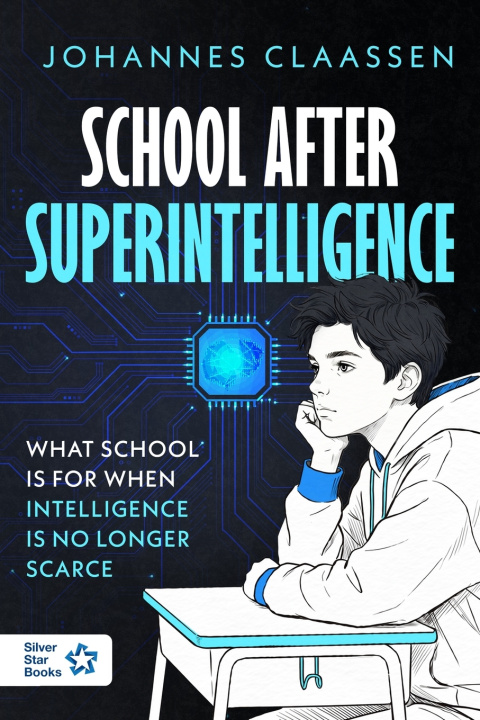
School After Superintelligence
What School Is For When Intelligence Is No Longer Scarce
 Inglês
 45 b
 Novo
Até 30 dias para devoluções
Também pode estar interessado em






 /
 Capa mole
 216.73
€

TWO YEARS, FIVE YEARS, FIFTEEN YEARS FROM NOW?
No one knows when artificial intelligence will surpass human beings at every cognitive task that schools have traditionally been built around. But schools cannot afford to wait until it happens.
For two hundred years, modern education has had a clear purpose: prepare children for productive life. Schools were factories for the future workforce, organised around knowledge transfer, measurable skills and the credentials that opened doors to employment. That model shaped the classroom, the timetable, the textbook, the test and the professional identity of the teacher.
Now this is all changing. Machines are taking over the very work that schools were built around.
If artificial intelligence can teach, tutor, assess and personalise learning better than any classroom can, and if the economy no longer needs what schools were designed to produce, then education faces the most important question in its modern history:
WHAT IS SCHOOL FOR?
School After Superintelligence explores five possible futures for education: some hopeful, some alarming and one that asks what learning means when usefulness is no longer the answer. It is a book about the end of knowledge scarcity, the danger of reducing schools to efficient delivery systems, and the urgent need to protect what no machine can provide: presence, relationship, moral formation and the experience of being known over time.
This is not a guide to using AI in the classroom. It is a call to reimagine what classrooms are for, before that decision is made for us.
When intelligence is abundant, education must become more human.
JOHANNES CLAASSEN has taught in classrooms across three continents, from an underfunded school in Hawaii to elite international institutions in Tehran and Hong Kong. He has worked alongside teachers and school leaders in Germany, Asia and the Middle East, and has spent two decades asking what education is truly for.
School After Superintelligence is his second book.


Sobre o livro
Inglês
Categorias

Ofereça este livro hoje
É fácil
1 Adicione ao carrinho e escolha Entregar como presente ao finalizar a compra 2 Receberá um vale 3 O livro chegará ao endereço do destinatárioOlá! Sou o Libroamiko, o seu conselheiro de livros.
Como posso ajudar?