
 Contacto
 Como comprar

Entrega
Guia de compras
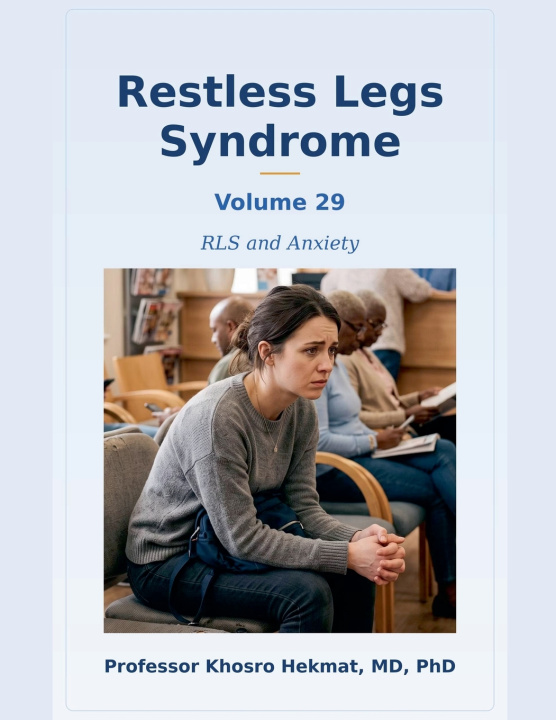
Restless Legs Syndrome - RLS and Anxiety
 Inglês
 100 b
 Em breve
 Novo
Até 30 dias para devoluções

The body sounds the alarm, and nobody asks why.
"I think mine is nerves." The sentence comes up regularly in the consulting room, sometimes from the patient, sometimes from the doctor, and it usually closes the matter. A sedative follows, or an antidepressant, or the advice to brood less. Yet that very sentence can stand in the way of the treatment that would have helped.
Anxiety appears in none of the diagnostic criteria for restless legs syndrome, and yet in one population study it was linked to it at least as strongly as depression. In an American population study of 1,024 participants, the odds ratio for panic disorder was 12.9, against 4.7 for major depression. Among 317 psychiatric inpatients, 16.4 per cent had restless legs syndrome, and 76.9 per cent of them received the diagnosis for the first time. The book shows how to keep anxiety and low mood apart, and why personality explains less than many assume.
The second part presents what has been measured in a body on alert: the excitatory transmitter in the thalamus, sluggish blood pressure regulation, reduced awareness of one's own heartbeat. One small experiment runs against expectation. Ten untreated patients were given the stress hormone hydrocortisone or saline late in the evening, and under the hormone their symptoms were less severe. Five of the ten felt an improvement, not one under placebo. It is a single experiment that has not been repeated, but it argues against the idea that the evening peak is simply a build-up of stress.
Then come the confusions and the medication trap. Night-time restlessness is taken for a panic attack, akathisia for restless legs. Mirtazapine worsened the legs in 28 per cent in a practice study, against 5 to 10 per cent for the other antidepressants. For benzodiazepines the Cochrane review found not one usable study, although about a quarter of those treated receive them. Pregabalin, by contrast, is a first-line agent for restless legs syndrome and is named as the preferred choice when anxiety comes with it, with its own cautions.
The final part draws an honest balance: what has been tested, how strong the placebo effect is in this condition, and how to conduct the conversation with your doctor. No sentence in the book is a reason to stop a medicine on your own.
WHAT IS IN THE BOOK
- How often restless legs and anxiety occur together
- Anxiety is not low mood: why the subscore matters more than the total
- Am I an anxious type? What personality research has found
- Hyperarousal: why the mind will not switch off in the evening
- Heart rate, blood pressure and the autonomic nervous system
- The stress hormone that quietens the legs
- The amygdala, body awareness and what sleep loss does to emotions
- Night-time restlessness or panic attack: how to tell them apart
- Akathisia and the overlooked diagnosis in psychiatry
- Restless and anxious children
- Antidepressants, sedatives, antipsychotics and acid blockers: what worsens the legs
- Pregabalin and gabapentin, the tested non-drug methods and the conversation with your doctor
WHO THIS BOOK IS FOR
For patients who are restless and tense at the same time in the evening, for people with an anxiety disorder and broken nights, for parents of restless children, and for anyone in psychiatric care who has not yet mentioned their leg symptoms.
ABOUT THE SERIES
Volume 29 of 52 in the book series on restless legs syndrome, part "RLS with Other Conditions". Every volume can be read on its own. The statements in this volume rest on 210 professional sources, each one listed individually in the reference section.


Sobre o livro
Inglês

Ofereça este livro hoje
É fácil
1 Adicione ao carrinho e escolha Entregar como presente ao finalizar a compra 2 Receberá um vale 3 O livro chegará ao endereço do destinatárioOlá! Sou o Libroamiko, o seu conselheiro de livros.
Como posso ajudar?