
 Contacto
 Como comprar
Entrega
Guia de compras
 Inglês
 135 b
135 b
Até 30 dias para devoluções
Os clientes também compraram
















 /
/
 Capa mole
 62.01
€
62.01
€


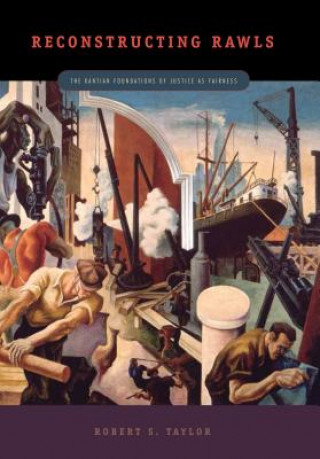
Reconstructing Rawls has one overarching goal: to reclaim Rawls for the Enlightenment-more specifically, the Prussian Enlightenment. Rawls's so-called political turn in the 1980s, motivated by a newfound interest in pluralism and the accommodation of difference, has been unhealthy for autonomy-based liberalism and has led liberalism more broadly toward cultural relativism, be it in the guise of liberal multiculturalism or critiques of cosmopolitan distributive-justice theories. Robert Taylor believes that it is time to redeem A Theory of Justice's implicit promise of a universalistic, comprehensive Kantian liberalism. Reconstructing Rawls on Kantian foundations leads to some unorthodox conclusions about justice as fairness, to be sure: for example, it yields a more civic-humanist reading of the priority of political liberty, a more Marxist reading of the priority of fair equality of opportunity, and a more ascetic or antimaterialist reading of the difference principle. It nonetheless leaves us with a theory that is still recognizably Rawlsian and reveals a previously untraveled road out of Theory-a road very different from the one Rawls himself ultimately followed.


Sobre o livro
Inglês

Ofereça este livro hoje
É fácil
1 Adicione ao carrinho e escolha Entregar como presente ao finalizar a compra 2 Receberá um vale 3 O livro chegará ao endereço do destinatárioTambém pode estar interessado em







 /
Livro de capa dura
68.91
€
/
Livro de capa dura
68.91
€









Olá! Sou o Libroamiko, o seu conselheiro de livros.
Como posso ajudar?