
 Contacto
 Como comprar
Entrega
Guia de compras
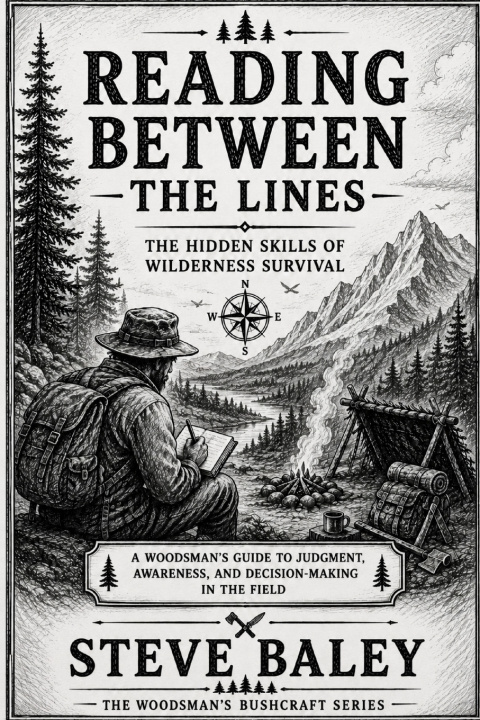
READING BETWEEN THE LINES
The Hidden Skills of Wilderness Survival A Woodsman's Bushcraft Guide to Judgment, Awareness, and Decision-Making in the Field
 Inglês
 37 b
37 b
 Em breve
 Novo
Novo
Até 30 dias para devoluções

Knowing how to build a fire, construct a shelter, treat water, navigate, and signal for rescue is important. But wilderness survival depends on something even more fundamental: knowing when to use those skills-and when not to.
In Reading Between the Lines: The Hidden Skills of Wilderness Survival, outdoorsman Steve Baley explores the judgment, awareness, and decision-making that stand between an ordinary outdoor problem and a genuine emergency.
Most wilderness emergencies do not begin with one catastrophic event. They develop quietly through a chain of small decisions. A missed trail marker becomes another half mile. Uncertainty becomes haste. Haste consumes daylight and energy. A hot spot becomes a blister. A falling temperature is ignored. A nearly exhausted phone battery is wasted. By the time the danger becomes obvious, several opportunities to stop the chain have already passed.
This book teaches readers how to recognize those opportunities.
Rather than offering another collection of isolated survival techniques, Reading Between the Lines examines "the skills between the skills"-the thought processes that help a person decide when to stop, move, turn around, build a fire, make shelter, conserve resources, call for help, or abandon a failing plan.
Through practical instruction and realistic wilderness situations, readers will learn how to:
• Separate facts from assumptions when their location becomes uncertain
• Use the first five minutes to interrupt panic and regain sound judgment
• Recognize when persistence has become dangerous stubbornness
• Treat daylight, energy, water, battery power, and physical strength as limited resources
• Choose the least dangerous option when every choice carries risk
• Read terrain, weather, changing water, and signs of nearby civilization
• Recognize how cold, heat, dehydration, pain, fatigue, and fear distort decisions
• Treat small injuries before they threaten mobility
• Decide whether to backtrack, stay in place, signal, or attempt self-rescue
• Use modern technology without becoming helpless when it fails
• Manage group fear, challenge a poor leader, and decide whether a group should ever separate
• Evaluate the added dangers of traveling after dark
• Preserve options and make the next good decision without creating a larger problem
The book also confronts one of the most dangerous temptations in the outdoors: taking action simply because action feels better than uncertainty. Sometimes the best decision is to stop, think, listen, and admit that the original plan no longer fits reality.
Each chapter brings the reader back to a central question: What does this situation mean for what happens next?
The experienced woodsman notices the sun dropping lower than expected, the wind beginning to shift, dampness in his socks, fatigue in a companion's voice, an unfamiliar trail, or a creek rising after rain. None of these things alone may constitute an emergency, but each provides information. Survival judgment comes from learning to combine those details into a complete picture before choices begin to disappear.
Written for hunters, hikers, campers, landowners, outdoor travelers, and anyone who spends time away from immediate help, this guide is valuable for beginners and experienced woodsmen alike. It does not promise a simple rule for every emergency. Instead, it develops the awareness needed to evaluate changing conditions honestly and respond wisely.
The wilderness is always giving you information. It speaks through the terrain, weather, darkness, your body, your companions, and the resources you have left. Are you paying attention?
The experienced woodsman knows many skills. The wise woodsman knows when to use them-and when not to. When the trail disappears, the weather changes, or the plan begins to fail, that wisdom may be the one thing th


Sobre o livro
Inglês

Ofereça este livro hoje
É fácil
1 Adicione ao carrinho e escolha Entregar como presente ao finalizar a compra 2 Receberá um vale 3 O livro chegará ao endereço do destinatárioOlá! Sou o Libroamiko, o seu conselheiro de livros.
Como posso ajudar?