
 Contacto
 Como comprar
Entrega
Guia de compras
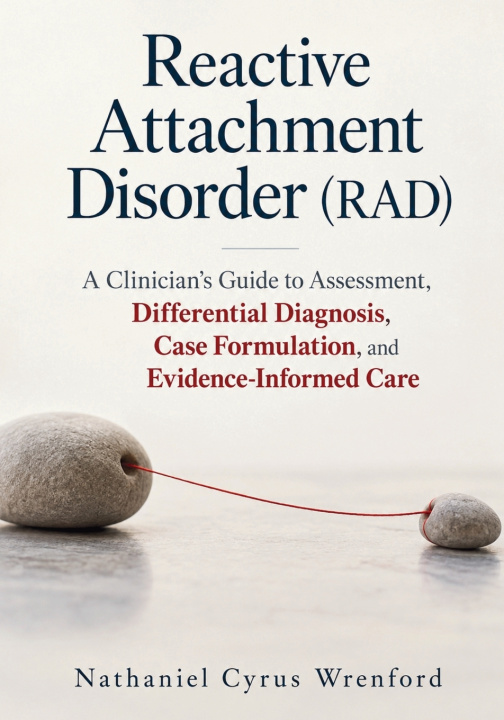
Reactive Attachment Disorder (RAD)
A Clinician's Guide to Assessment, Differential Diagnosis, Case Formulation, and Evidence-Informed Care
 Inglês
 40 b
40 b
 Em breve
 Novo
Novo
Até 30 dias para devoluções

When an RAD Referral Is Not the Whole Answer
Reactive Attachment Disorder can be difficult to assess because the diagnosis is often used alongside broader terms such as attachment difficulties, trauma, disrupted caregiving, and relational problems. For clinicians, the challenge is not simply recognizing concerning behavior. It is determining what evidence actually supports RAD, what points toward another explanation, and what the child needs next.
What This Book Helps You Do
Reactive Attachment Disorder (RAD) gives clinicians a structured approach to assessment, differential diagnosis, case formulation, and evidence-informed care. It explains how to examine caregiving history, attachment-related behavior, direct observation, caregiver reports, collateral information, coexisting conditions, and developmental factors without allowing one label to explain the entire child. The book also addresses distinctions between RAD and Disinhibited Social Engagement Disorder, trauma-related presentations, autism, ADHD, mood and anxiety problems, and other conditions that can complicate clinical reasoning.
What Makes This Book Different
This is a clinician-focused guide built around diagnostic precision rather than behavior checklists or a single treatment model. It separates established diagnostic guidance from direct empirical findings, indirect treatment evidence, clinical recommendations, and areas where evidence remains limited. Practical case examples, assessment questions, formulation tools, differential diagnosis prompts, caregiver guidance, and clinical decision frameworks help translate research into day-to-day practice.
Who This Book Is For
This book is for readers who assess or treat children with complex developmental and relational histories, including psychologists, psychiatrists, clinical social workers, counselors, therapists, and other child mental-health professionals. It will also be useful to clinicians working with foster-care, adoption, residential, pediatric, developmental, educational, and child-welfare systems, as well as graduate trainees seeking a clearer framework for RAD assessment and case formulation.
A Clearer Clinical Starting Point
Reactive Attachment Disorder should be neither overlooked nor used as shorthand for every difficulty following early adversity. If you want a practical guide to understanding RAD, testing competing explanations, communicating diagnostic uncertainty, and building treatment plans that match the evidence, this book provides a structured place to begin.


Sobre o livro
Inglês
Categorias

Ofereça este livro hoje
É fácil
1 Adicione ao carrinho e escolha Entregar como presente ao finalizar a compra 2 Receberá um vale 3 O livro chegará ao endereço do destinatárioOlá! Sou o Libroamiko, o seu conselheiro de livros.
Como posso ajudar?