
 Contacto
 Como comprar
Entrega
Guia de compras
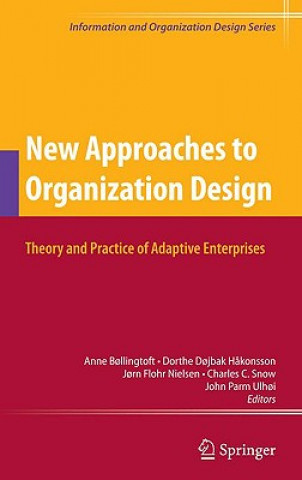
New Approaches to Organization Design
Theory and Practice of Adaptive Enterprises
 Inglês
 277 b
277 b
Até 30 dias para devoluções
Os clientes também compraram




 /
/
 Livro de capa dura
 37.60
€
37.60
€






 /
Capa mole
26.48
€
/
Capa mole
26.48
€


 /
/
 CD de áudio
14.45
€
CD de áudio
14.45
€

Organization design is a key feature of management theory and practice. It addresses the challenges of constructing and maintaining effective organizations. Essential to organizational design is the assumption that it can improve organizations.§Faced with the ever-accelerating pace of technological change and the restructuring of markets, many firms have been questioning their own organization. Consequently, we have witnessed much organizational experimentation and the development of new forms of organizing over the last decade. How does organizational design inform such experimentation? And how can organizational design help managers gain insights and advance the prevalent understanding of how organizations can meet such new environmental challenges and constraints?§This book is the third to emerge from a series of workshops on organization design, featuring new empirical research and theoretical insights. The chapters are organized around four central themes: 1) Towards New Organizational Forms, 2) Dynamics of Adaptation and Change, 3) Theoretical and Practical issues, 4) Fit and Performance. We include an outline for the book with authors and chapter titles. Common for all individual contributions is a focus on the core theories of OD and emerging perspectives. Collectively, the chapters reflect the state of the art of OD as well as provide a further step towards the evolution of this important field of research.Organization design (OD) is a key feature of management theory and practice. It addresses the challenges of constructing and maintaining effective organizations. Essential to its application is the assumption that it can improve organizations and their performance. §Faced with the ever-accelerating pace of technological change and the restructuring of markets, many firms have questioned their own organizational structures and processes. Consequently, we have witnessed much organizational experimentation and the development of new forms of organizing over the last decade. How does organization design inform such experimentation? And how can organization design help managers gain insights and advance the current understanding of how organizations can meet environmental challenges and constraints in the future? §This book is the third volume to emerge from a series of workshops on organization design, featuring new empirical research and theoretical insights. The chapters are organized around three central themes: (1) Towards New Organizational Forms; (2) Dynamics of Adaption and Change; and (3) Fit and Performance. The chapters cover such timely issues as organizational networks, virtuality, learning, dynamic capabilities, and adaptation. Common to all contributions is a focus on the core theories of OD and emerging perspectives. Collectively, the chapters reflect the state of the art of OD and provide a further step toward the evolution of this important field of research.


Sobre o livro
Inglês

Ofereça este livro hoje
É fácil
1 Adicione ao carrinho e escolha Entregar como presente ao finalizar a compra 2 Receberá um vale 3 O livro chegará ao endereço do destinatárioTambém pode estar interessado em


 /
Capa mole
95.63
€
/
Capa mole
95.63
€



 /
Capa mole
47.10
€
/
Capa mole
47.10
€



 /
Livro de capa dura
17.28
€
/
Livro de capa dura
17.28
€




 /
Capa mole
45.58
€
/
Capa mole
45.58
€

 /
Capa mole
73.79
€
/
Capa mole
73.79
€

 /
Livro de capa dura
130.30
€
/
Livro de capa dura
130.30
€


 /
Capa mole
12.63
€
/
Capa mole
12.63
€

Olá! Sou o Libroamiko, o seu conselheiro de livros.
Como posso ajudar?