
 Contacto
 Como comprar

Entrega
Guia de compras
 Inglês
 61 b
 Novo
Até 30 dias para devoluções

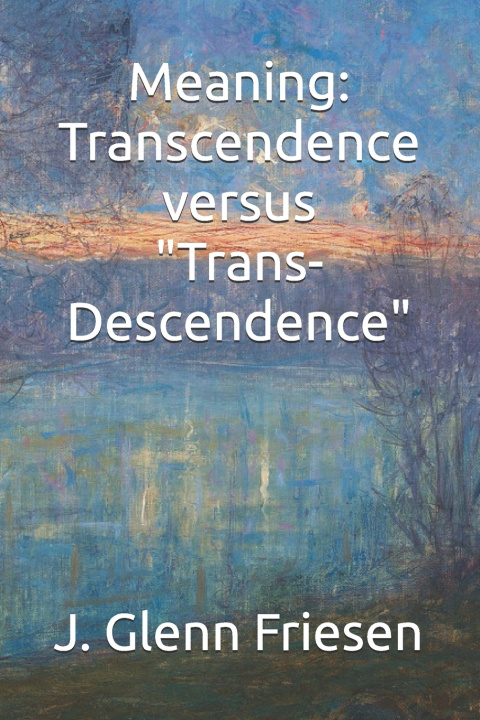
Our world not only has meaning, it is meaning. It is the meaning of the Word of God, spoken at creation. The world only has meaning because it is meaning. We do not create or construct meaning; it is already there to be discovered. This idea is found in the philosophy of Herman Dooyeweerd, but was not original to him. We find this belief in Egyptian Memphite theology, in Philo of Alexandria's Logos philosophy, in the Modistae in medieval philosophy, the pan-semiotics of Louis-Claude de St. Martin, Jewish and Christian Kabbalah, Christian theosophists like Jacob Boehme and Franz von Baader, early Romantics like J.G. Hamann, Novalis, Friedrich Schlegel, Samuel Taylor Coleridge, neo-Thomist theologians like John R. Betz, in the existential theology of Paul Tillich, and in the writings of members of C.S.Lewis's group the Inklings, like Owen Barfield, J.R.R. Tolkien, and Charles Williams.
The idea of a transcendent origin of meaning can be contrasted with the this-worldly Romanticism of philosophers like J.G. Fichte, J.G. Herder, F.W.J. Schelling, Wilhelm von Humboldt and poets like Friedrich Hölderlin and William Wordsworth. This restriction of meaning to time and history is continued by 20th century philosophers like Emil Lask, Martin Heidegger, and Walter Benjamin.
The research and analysis in this book will be of interest not only to reformational philosophers, but to philosophers in general. For example, not many people are aware that both Heidegger and Benjamin engaged with the theosophical ideas of Franz von Baader. But their philosophies did not accept a transcendence, but only what has been called a "trans-descendence."
This book is in some ways also critical of Dooyeweerd. He mischaracterizes the ideas of philosophers like Philo of Alexandria with respect to Logos Mysticism. His ideas on evolution need to be corrected. His understanding of history seems flawed. And the book expands on Dooyeweerd's idea of a proper dialectic in theoretical thought. This dialectic can be compared with the romantic epistemology of Novalis.


Sobre o livro
Inglês

Ofereça este livro hoje
É fácil
1 Adicione ao carrinho e escolha Entregar como presente ao finalizar a compra 2 Receberá um vale 3 O livro chegará ao endereço do destinatárioOlá! Sou o Libroamiko, o seu conselheiro de livros.
Como posso ajudar?