
 Contacto
 Como comprar
Entrega
Guia de compras
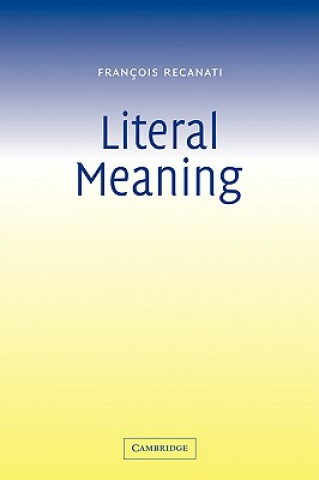
Literal Meaning
 Inglês
 111 b
111 b
Até 30 dias para devoluções
Os clientes também compraram











 /
/
 Capa mole
 13.11
€
13.11
€

 /
Capa mole
28.96
€
/
Capa mole
28.96
€



 /
Capa mole
39.36
€
/
Capa mole
39.36
€
 /
Capa mole
21.09
€
/
Capa mole
21.09
€



According to the dominant position among philosophers of language today, we can legitimately ascribe determinate contents (such as truth-conditions) to natural language sentences, independently of what the speaker actually means. This view contrasts with that held by ordinary language philosophers fifty years ago: according to them, speech acts, not sentences, are the primary bearers of content. François Recanati argues for the relevance of this controversy to the current debate about semantics and pragmatics. Is 'what is said' (as opposed to merely implied) determined by linguistic conventions, or is it an aspect of 'speaker's meaning'? Do we need pragmatics to fix truth-conditions? What is 'literal meaning'? To what extent is semantic composition a creative process? How pervasive is context-sensitivity? Recanati provides an original and insightful defence of 'contextualism', and offers an informed survey of the spectrum of positions held by linguists and philosophers working at the semantics/pragmatics interface.


Sobre o livro
Inglês

Ofereça este livro hoje
É fácil
1 Adicione ao carrinho e escolha Entregar como presente ao finalizar a compra 2 Receberá um vale 3 O livro chegará ao endereço do destinatárioTambém pode estar interessado em

 /
Livro de capa dura
65.51
€
/
Livro de capa dura
65.51
€





 /
Capa mole
86.60
€
/
Capa mole
86.60
€





 /
Livro de capa dura
31.59
€
/
Livro de capa dura
31.59
€










Olá! Sou o Libroamiko, o seu conselheiro de livros.
Como posso ajudar?