
 Contacto
 Como comprar
Entrega
Guia de compras
 Inglês
 394 b
394 b
Até 30 dias para devoluções
Os clientes também compraram





 /
/
 Capa mole
 28.32
€
28.32
€










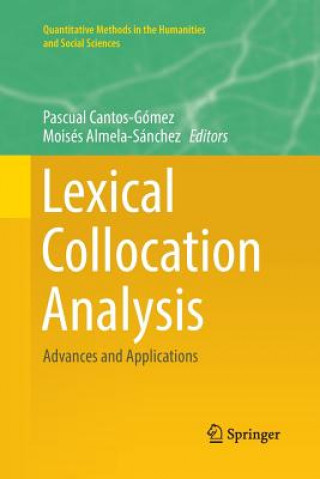
This book re-examines the notion of word associations, more precisely collocations. It attempts to come to a potentially more generally applicable definition of collocation and how to best extract, identify and measure collocations. The book highlights the role played by (i) automatic linguistic annotation (part-of-speech tagging, syntactic parsing, etc.), (ii) using semantic criteria to facilitate the identification of collocations, (iii) multi-word structured, instead of the widespread assumption of bipartite collocational structures, for capturing the intricacies of the phenomenon of syntagmatic attraction, (iv) considering collocation and valency as near neighbours in the lexis-grammar continuum and (v) the mathematical properties of statistical association measures in the automatic extraction of collocations from corpora. This book is an ideal guide to the use of statistics in collocation analysis and lexicography, as well as a practical text to the development of skills in the application of computational lexicography. Lexical Collocation Analysis: Advances and Applications begins with a proposal for integrating both collocational and valency phenomena within the overarching theoretical framework of construction grammar. Next the book makes the case for integrating advances in syntactic parsing and in collocational analysis. Chapter 3 offers an innovative look at complementing corpus data and dictionaries in the identification of specific types of collocations consisting of restricted predicate-argument combinations. This strategy complements corpus collocational data with network analysis techniques applied to dictionary entries. Chapter 4 explains the potential of collocational graphs and networks both as a visualization tool and as an analytical technique. Chapter 5 introduces MERGE (Multi-word Expressions from the Recursive Grouping of Elements), a data-driven approach to the identification and extraction of multi-word expressions from corpora. Finally the book concludes with an analysis and evaluation of factors influencing the performance of collocation extraction methods in parsed corpora.


Sobre o livro
Inglês

Ofereça este livro hoje
É fácil
1 Adicione ao carrinho e escolha Entregar como presente ao finalizar a compra 2 Receberá um vale 3 O livro chegará ao endereço do destinatárioTambém pode estar interessado em


 /
Capa mole
86.19
€
/
Capa mole
86.19
€
 /
/
 Adobe ePub DRM
5.45
€
Adobe ePub DRM
5.45
€


 /
Capa mole
32.27
€
/
Capa mole
32.27
€
 /
Livro de capa dura
77.39
€
/
Livro de capa dura
77.39
€
 /
Capa mole
32.77
€
/
Capa mole
32.77
€


 /
Livro de capa dura
34.09
€
/
Livro de capa dura
34.09
€




 /
Livro de capa dura
32.57
€
/
Livro de capa dura
32.57
€
Olá! Sou o Libroamiko, o seu conselheiro de livros.
Como posso ajudar?