
 Contacto
 Como comprar
Entrega
Guia de compras
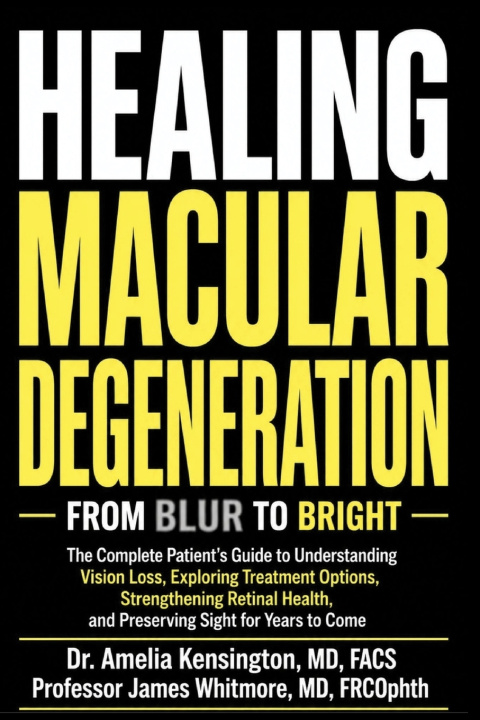
HEALING MACULAR DEGENERATION
FROM BLUR TO BRIGHT: The Complete Patient's Guide to Understanding Vision Loss, Exploring Treatment Options, Strengthening Retinal Health...
 Inglês
 44 b
44 b
 Em breve
 Novo
Novo
Até 30 dias para devoluções

A diagnosis of macular degeneration can leave you with more questions than answers.
What exactly is happening to your vision? Is it dry or wet macular degeneration? How quickly might it progress? What do the scans and test results mean, and what can actually be done to protect the sight you still have?
From Blur to Bright offers a clear, authoritative guide through those questions and the decisions that follow.
Written for patients, families, and anyone seeking a deeper understanding of age-related macular degeneration, this book explains the disease without reducing it to a collection of confusing medical terms. It takes you from the earliest changes in central vision and the diagnostic process through staging, prognosis, monitoring, treatment, and the practical realities of living with changing sight. The book explains what clinicians are looking for in examinations and retinal imaging, including OCT, OCTA, fluorescein angiography, fundus autofluorescence, and microperimetry.
Particular attention is given to the distinction between dry and wet macular degeneration, the risk of progression, and the warning signs that should never be ignored. You will learn why new distortion, waviness of straight lines, a dark or missing area in central vision, or a sudden change in visual quality can require urgent assessment.
The book also takes an honest look at modern treatment for macular degeneration, including anti-VEGF therapy and newer approaches for geographic atrophy. Rather than simply listing treatments, it explains the reasoning behind them, what treatment is intended to accomplish, why some patients require ongoing therapy, and why early recognition of active disease matters.
Just as importantly, From Blur to Bright goes beyond the consulting room. It considers self-monitoring, nutrition, lifestyle, low-vision strategies, technology, psychological wellbeing, and long-term planning, helping readers understand how these elements fit together rather than treating them as isolated pieces of advice.
There are no promises of miracle cures and no attempt to disguise the seriousness of the disease. Instead, the book presents something far more useful: a realistic understanding of what macular degeneration is, what modern medicine can offer, what you can monitor yourself, and how to make informed decisions about your care.
For someone newly diagnosed, already receiving treatment, concerned about changes in central vision, or supporting a loved one through the condition, this book provides a knowledgeable and practical companion for understanding the road ahead.
When your vision begins to change, understanding what is happening is the first step toward knowing what to do next.


Sobre o livro
Inglês
