
 Contacto
 Como comprar
Entrega
Guia de compras
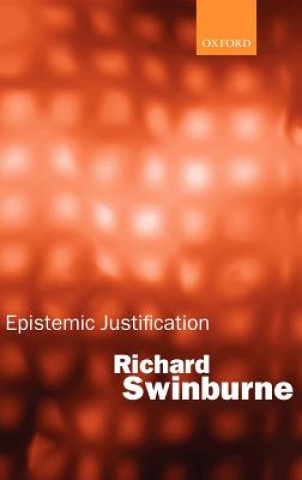
Epistemic Justification
 Inglês
 161 b
161 b
Política de devolução de 30 dias
Os clientes também compraram

 /
/
 Capa mole
 42.43
€
42.43
€





 /
Capa mole
43.23
€
/
Capa mole
43.23
€








 /
Capa mole
82.42
€
/
Capa mole
82.42
€

















Richard Swinburne offers an original treatment of a question at the heart of epistemology: what makes a belief a rational one, or one which the believer is justified in holding? He maps the various totally different and purportedly rival accounts that philosophers give of epistemic justification ('internalist' and 'externalist'), and argues that they are really accounts of different concepts. He distinguishes (as most epistemologists do not) between synchronic justification (justification at a time) and diachronic justification (synchronic justification resulting from adequate investigation) - both internalist and externalist. He argues that most kinds of justification are worth having because (for different reasons) indicative of truth. However, it is only justification of intermalist kinds that can guide a believer's actions. Swinburne goes on to show the usefulness of the probability calculus in elucidating how empirical evidence makes beliefs probably true: every proposition has an intrinsic probability (an a priori probability independent of empirical evidence) which may be increased or decreased by empirical evidence. This innovative and challenging book will refresh epistemology and rewrite its agenda.


Sobre o livro
Inglês

Ofereça este livro hoje
É fácil
1 Adicione ao carrinho e escolha Entregar como presente ao finalizar a compra 2 Receberá um vale 3 O livro chegará ao endereço do destinatárioTambém pode estar interessado em




 /
Capa mole
23.99
€
/
Capa mole
23.99
€





 /
Livro de capa dura
160.08
€
/
Livro de capa dura
160.08
€











Olá! Sou o Libroamiko, o seu conselheiro de livros.
Como posso ajudar?