
 Contacto
 Como comprar
Entrega
Guia de compras
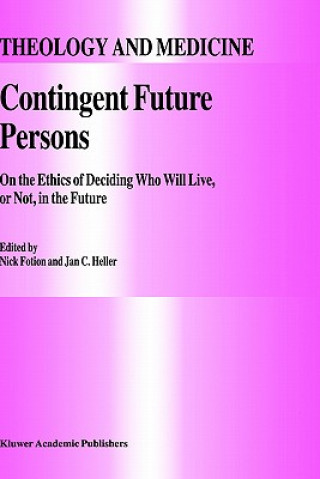
Contingent Future Persons
On the Ethics of Deciding Who Will Live, or Not, in the Future
 Inglês
 222 b
222 b
Política de devolução de 30 dias
Os clientes também compraram










How ought we evaluate the individual and collective actions on which the existence, numbers and identities of future people depend? In the briefest of terms, this question poses what is addressed here as the problem of contingent future persons, and as such it poses relatively novel challenges for philosophical and theological ethicists. For though it may be counter-intuitive, it seems that those contingent future persons who are actually brought into existence by such actions cannot benefit from or be harmed by these actions in any conventional sense of the terms. This intriguing problem was defined almost three decades ago by Jan Narveson [2], and to date its implications have been explored most exhaustively by Derek Parfit [3] and David Heyd [1]. Nevertheless, as yet there is simply no consensus on how we ought to evaluate such actions or, indeed, on whether we can. Still, the pursuit of a solution to the problem has been interestingly employed by moral philosophers to press the limits of ethics and to urge a reconsideration of the nature and source of value at its most fundamental level. It is thus proving to be a very fruitful investigation, with far-reaching theoretical and practical implications.


Sobre o livro
Inglês
Categorias

Ofereça este livro hoje
É fácil
1 Adicione ao carrinho e escolha Entregar como presente ao finalizar a compra 2 Receberá um vale 3 O livro chegará ao endereço do destinatárioTambém pode estar interessado em

 /
/
 Capa mole
 28.65
€
28.65
€

 /
Capa mole
8.80
€
/
Capa mole
8.80
€













 /
Capa mole
50.63
€
/
Capa mole
50.63
€
Olá! Sou o Libroamiko, o seu conselheiro de livros.
Como posso ajudar?