
 Contacto
 Como comprar
Entrega
Guia de compras
Clustering Techniques for Image Segmentation
 Inglês
 193 b
193 b
Política de devolução de 30 dias
Os clientes também compraram



 /
/
 Capa mole
 40.10
€
40.10
€



 /
Livro de capa dura
33.51
€
/
Livro de capa dura
33.51
€

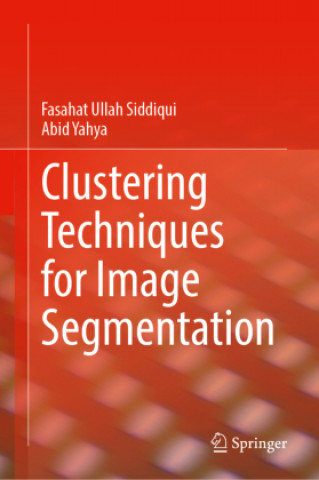
This book presents the workings of major clustering techniques along with their advantages and shortcomings. After introducing the topic, the authors illustrate their modified version that avoids those shortcomings. The book then introduces four modified clustering techniques, namely the Optimized K-Means (OKM), Enhanced Moving K-Means-1(EMKM-1), Enhanced Moving K-Means-2(EMKM-2), and Outlier Rejection Fuzzy C-Means (ORFCM). The authors show how the OKM technique can differentiate the empty and zero variance cluster, and the data assignment procedure of the K-mean clustering technique is redesigned. They then show how the EMKM-1 and EMKM-2 techniques reform the data-transferring concept of the Adaptive Moving K-Means (AMKM) to avoid the centroid trapping problem. And that the ORFCM technique uses the adaptable membership function to moderate the outlier effects on the Fuzzy C-meaning clustering technique. This book also covers the working steps and codings of quantitative analysis methods. The results highlight that the modified clustering techniques generate more homogenous regions in an image with better shape and sharp edge preservation.Showcases major clustering techniques, detailing their advantages and shortcomings;Includes several methods for evaluating the performance of segmentation techniques;Presents several applications including medical diagnosis systems, satellite imaging systems, and biometric systems.


Sobre o livro
Inglês

Ofereça este livro hoje
É fácil
1 Adicione ao carrinho e escolha Entregar como presente ao finalizar a compra 2 Receberá um vale 3 O livro chegará ao endereço do destinatárioTambém pode estar interessado em
 /
Livro de capa dura
183.62
€
/
Livro de capa dura
183.62
€











 /
Livro de capa dura
127.20
€
/
Livro de capa dura
127.20
€










 /
Capa mole
46.07
€
/
Capa mole
46.07
€

Olá! Sou o Libroamiko, o seu conselheiro de livros.
Como posso ajudar?