
 Contacto
 Como comprar
Entrega
Guia de compras
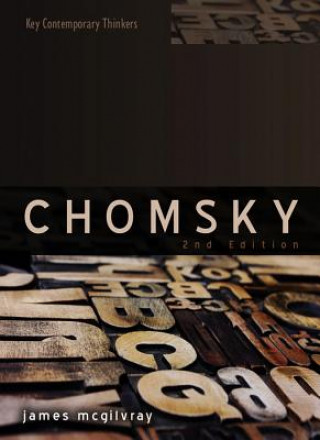
Chomsky - Language, Mind and Politics 2e
 Inglês
 155 b
155 b
Política de devolução de 30 dias
Os clientes também compraram







 /
/
 Capa mole
 23.43
€
23.43
€

 /
/
 Calendário
18.08
€
Calendário
18.08
€














Noam Chomsky has made major contributions to three fields: political history and analysis, linguistics, and the philosophies of mind, language, and human nature. In this thoroughly revised and updated volume, James McGilvray provides a critical introduction to Chomsky's work in these three key areas and assesses their continuing importance and relevance for today. In an incisive and comprehensive analysis, McGilvray argues that Chomsky's work can be seen as a unified intellectual project. He shows how Chomsky adapts the tools of natural science to the study of mind and of language in particular and explains why Chomsky's "rationalist" approach to the mind continues to be opposed by the majority of contemporary cognitive scientists. The book also discusses some of Chomsky's central political themes in depth, examining how Chomsky's view of the good life and the ideal form of social organization is related to and in part dependent on his biologically based account of human nature and the place of language within it. As in the first edition, McGilvray emphasizes the distinction between common sense and science and the difference between rationalist and empiricist approaches to the mind, making clear the importance of these themes for understanding Chomsky's work and showing that they are based on elementary observations that are accessible to everyone. This edition has been extensively re-written to emphasize Chomsky's recent work, which increasingly 'biologizes' the study of language and mind and - by implication - the study of human nature. This book will be of interest to students and scholars of philosophy, linguistics, and politics, as well as to all those keen to develop a critical understanding of one of the most controversial and important thinkers writing today.


Sobre o livro
Inglês

Ofereça este livro hoje
É fácil
1 Adicione ao carrinho e escolha Entregar como presente ao finalizar a compra 2 Receberá um vale 3 O livro chegará ao endereço do destinatárioTambém pode estar interessado em
 /
Livro de capa dura
194.21
€
/
Livro de capa dura
194.21
€







 /
Livro de capa dura
34.25
€
/
Livro de capa dura
34.25
€



 /
Livro de capa dura
18.18
€
/
Livro de capa dura
18.18
€
 /
Capa mole
12.82
€
/
Capa mole
12.82
€



 /
Capa mole
11.61
€
/
Capa mole
11.61
€


 /
Capa mole
8.58
€
/
Capa mole
8.58
€




 /
Capa mole
12.02
€
/
Capa mole
12.02
€