
 Contacto
 Como comprar

Entrega
Guia de compras
 Inglês
 41 b
 Novo
Até 30 dias para devoluções

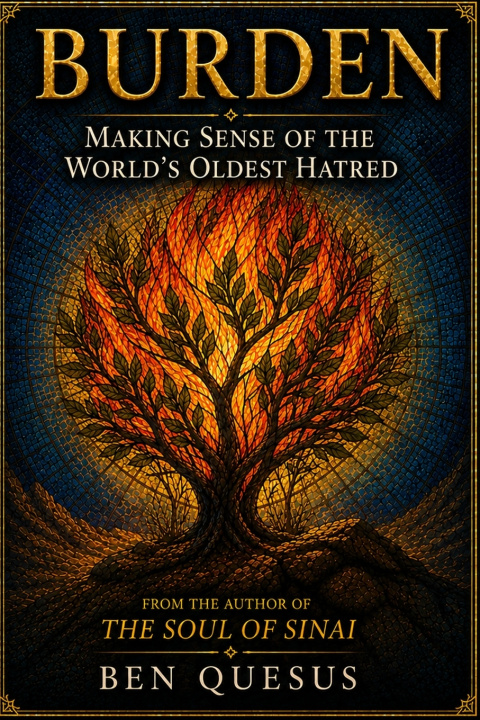
Why does hatred of Jews survive every explanation built to contain it - outlasting the accusations meant to justify it and reappearing in a new disguise every century? The accusations change, but the defendant is always the same.
BURDEN: Making Sense of the World's Oldest Hatred, approaches the question through three registers: Theology, Logic, and History.The first works through the Torah's own architecture by tracing the hatred back through the origin of Israel itself and its arrival at Sinai, where a people enters into covenant with the Divine. It leads to the book's central and perhaps most unsettling claim: the antisemite is, in fact, pointing at something. He just doesn't know what he is pointing at.
The second tests the logic against the evidence: twelve case studies - UNRWA, AIPAC, the genocide and apartheid accusations, campus antisemitism, the United Nations, October 7, and others - each asking whether Jews are being held to the same standards as everyone else, and what happens to the logic when they are not.
The third turns to the historical record: centuries of European expulsions, massacres, and pogroms, set beside the modern era's genocides and the histories of Jews and Arabs in the land they both claim - so that the pattern can be checked, not merely argued.
Written with the same unflinching inquiry as The Soul of Sinai, BURDEN does not explain antisemitism away. Nor does it ask that Jews be exempted from judgment.
It asks the reader to examine the judgment itself - and then to look more closely at what the antisemite has been pointing at all along.


Sobre o livro
Inglês

Ofereça este livro hoje
É fácil
1 Adicione ao carrinho e escolha Entregar como presente ao finalizar a compra 2 Receberá um vale 3 O livro chegará ao endereço do destinatárioOlá! Sou o Libroamiko, o seu conselheiro de livros.
Como posso ajudar?