
 Contacto
 Como comprar
Entrega
Guia de compras
 Inglês
 78 b
78 b
Até 30 dias para devoluções

In today's fast-paced world of engineering and product development, innovation is accelerating at an unprecedented rate. Companies across industries are introducing new products with advanced features, smarter materials, and cutting-edge technologies to meet the evolving demands of global markets. While this rapid innovation fosters progress, it also raises a critical question: how do we ensure that these products are safe, reliable, and compliant with ever-changing international standards? The answer lies in product certification-a process designed to evaluate, test, and validate products against established benchmarks of safety, performance, and compliance.
Traditionally, product certification has been a labor-intensive, time-consuming, and costly process. Engineers, auditors, and testing agencies have relied heavily on manual inspections, documentation reviews, and extensive physical tests. With globalization, regulatory diversity, and shrinking time-to-market windows, traditional approaches struggle to keep pace. This creates bottlenecks, inefficiencies, and in some cases, risks of human error.
This is where Artificial Intelligence (AI) steps in as a transformative force. AI technologies such as machine learning, natural language processing, computer vision, and predictive analytics are reshaping the way certifications are managed and executed. By leveraging AI, organizations can automate repetitive tasks, predict compliance risks before they occur, optimize testing procedures, and even create self-learning certification systems that evolve with new regulations and product categories.
The promise of AI in product certifications is twofold:
- Efficiency Gains - Reducing time, cost, and effort in the certification process.
- Enhanced Assurance - Increasing accuracy, consistency, and confidence in compliance outcomes.
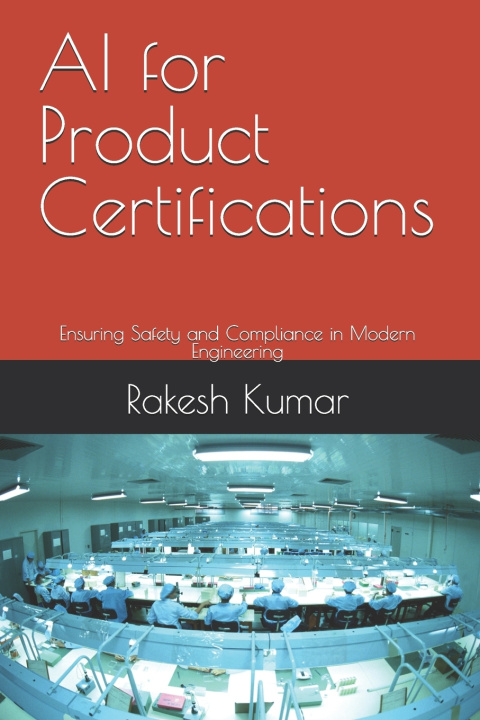
This book, "AI for Product Certifications: Ensuring Safety and Compliance in Modern Engineering", explores this exciting convergence of AI and certification processes. It provides insights into how AI can be applied to quality testing, regulatory compliance, safety validation, audit automation, and continuous monitoring of certified products in the field. Through case studies, practical examples, and hands-on demonstrations with code, readers will discover the practical and future-ready applications of AI in certification ecosystems.
Ultimately, the vision is clear: a future where product certifications are fully AI-enabled-faster, more reliable, globally harmonized, and continuously adaptive. In this future, businesses will not just meet compliance obligations-they will embrace a proactive approach to safety and trust, powered by AI.
This book aims to guide engineers, certification professionals, compliance officers, regulators, and innovators on this journey, offering a roadmap to transform certification from a bottleneck into a catalyst for innovation and safety in modern engineering.


Sobre o livro
Inglês

Ofereça este livro hoje
É fácil
1 Adicione ao carrinho e escolha Entregar como presente ao finalizar a compra 2 Receberá um vale 3 O livro chegará ao endereço do destinatárioOlá! Sou o Libroamiko, o seu conselheiro de livros.
Como posso ajudar?