
 Contacto
 Como comprar
Entrega
Guia de compras
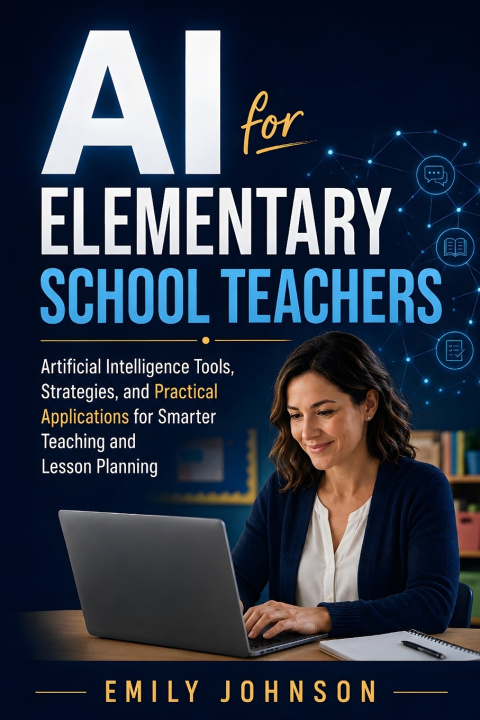
AI for Elementary School Teachers
Artificial Intelligence Tools, Strategies, and Practical Applications for Smarter Teaching and Lesson Planning
 Inglês
 34 b
34 b
 Novo
Novo
Até 30 dias para devoluções

Elementary school teachers are being asked to do more than ever. Between lesson planning, classroom instruction, differentiated activities, assessments, parent communication, administrative responsibilities, and the unexpected demands of each school day, time is one of the most valuable resources a teacher has.
Artificial intelligence can help you use that time more effectively.
AI for Elementary School Teachers: Artificial Intelligence Tools, Strategies, and Practical Applications for Smarter Teaching and Lesson Planning is a comprehensive, practical guide to using AI in elementary education. Written for teachers who want useful applications rather than technical theory, this book provides a thorough exploration of how artificial intelligence can support the work you already do-helping you develop ideas, streamline preparation, adapt instructional materials, improve classroom resources, and approach familiar challenges with greater flexibility.
You do not need a background in computer science or advanced technical skills to begin. What matters is learning how to use AI with purpose.
Artificial intelligence can turn a blank page into a useful starting point. It can help brainstorm lesson ideas, generate activities, create discussion questions, adapt explanations, develop materials, organize information, and explore different ways to reach the same learning objective. It can also support differentiated instruction by helping teachers create alternative explanations, examples, practice activities, and questions for students with different needs.
But effective AI use is about more than entering a request and accepting the first answer.
The most useful results come when the teacher remains in control.
This book presents AI as a professional tool, not a substitute for professional judgment. You bring the knowledge technology cannot possess: an understanding of your students, classroom, curriculum, and instructional goals. AI can generate possibilities, but you decide which ideas are accurate, appropriate, useful, and worth developing.
You will learn how to communicate effectively with AI by providing context, defining goals, adding constraints, requesting specific formats, and refining responses. Effective prompts do not require complicated technical language; clearly explaining what you need, who it is for, and what the result should accomplish often makes the greatest difference.
The guide explores practical applications across planning, instructional design, differentiation, assessment, classroom activities, resource creation, communication, organization, and professional productivity. AI can help you develop alternative explanations, generate examples, adjust activity complexity, and find new approaches when a lesson is not connecting with every learner.
Whether you are curious about AI, already experimenting with it, or seeking more efficient ways to plan and teach, this book provides a clear path forward. It will help you move beyond the hype and focus on saving time, expanding creative options, supporting flexible instruction, improving resources, and using artificial intelligence with confidence and professional judgment.
You do not have to change everything about the way you teach. You simply need to understand where the right tools can make a meaningful difference.
Discover how AI can become a practical part of your teaching toolkit-and start exploring smarter ways to plan, create, adapt, assess, organize, and teach.


Sobre o livro
Inglês

Ofereça este livro hoje
É fácil
1 Adicione ao carrinho e escolha Entregar como presente ao finalizar a compra 2 Receberá um vale 3 O livro chegará ao endereço do destinatárioOlá! Sou o Libroamiko, o seu conselheiro de livros.
Como posso ajudar?