
 Contacto
 Como comprar

Entrega
Guia de compras
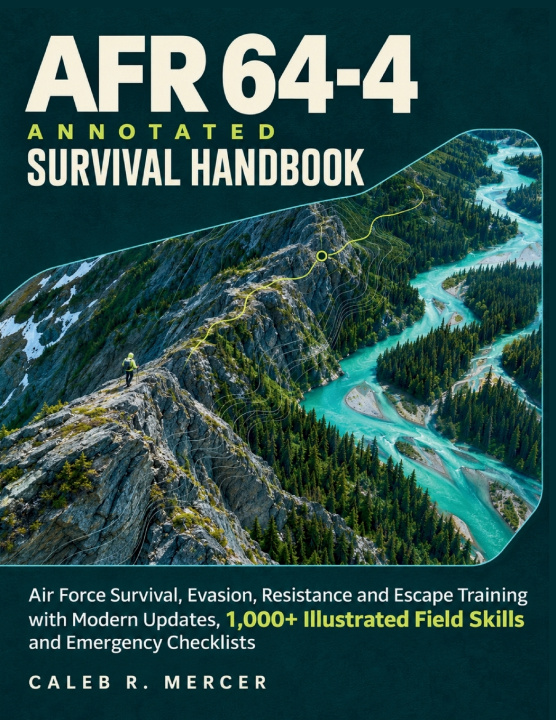
AFR 64-4 Annotated Survival Handbook
Air Force Survival, Evasion, Resistance and Escape Training with Modern Updates, 1,000+ Illustrated Field Skills and Emergency Checklists
 Inglês
 57 b
 Em breve
 Novo
 Entrega de Natal ▾
Reabastecimento esperado
Lançamento 17. 11. 2026
Até 30 dias para devoluções

What would you do first if the trail disappeared, daylight was fading, and the only person who knew your route was waiting for a call you couldn't make?
When the way back is uncertain, every choice matters. Do you retrace your steps, stay where rescuers are likely to look, or move because the ground you're on has become unsafe? A clear plan helps you sort through those choices while there's still time to act. The AFR 64-4 Annotated Survival Handbook by Caleb R. Mercer gives you a way to think through the first hour and prepare for what comes after it.
This independent handbook draws on the U.S. Air Force's 1985 survival regulation and explains its ideas alongside modern field guidance. Across 30 chapters and 1,020 illustrated skills, it covers immediate dangers, injury assessment, clothing and insulation, shelter, fire, drinking water, navigation, and rescue signaling. The military chapters explain survival, evasion, resistance, and escape in the context of military isolation, captivity, and recovery. The civilian chapters show how to use the field skills on a day hike, during a vehicle stranding, or when severe weather changes your plans.
Make better decisions when plans change
Set first-hour priorities. Take stock of hazards, injuries, weather, daylight, and supplies. Decide whether to stay, move, or seek help as conditions change.
Protect yourself from exposure. Choose clothing and shelter for cold, heat, wind, or rain. Evaluate a shelter site and know when a fire would create a greater hazard.
Choose a water treatment method. Compare boiling, filtration, and disinfection. Learn when a water source calls for a different treatment and when to find another source altogether.
Find your position and communicate it. Read terrain, cross-check a map against your compass or GPS, and give rescuers a location they can use, even when your exact position is uncertain.
Build skills you can practice before you need them
Pack for the trip and the season. Match clothing, lighting, water, and communications gear to your route. Use the packing guidance to spot gaps before a short outing turns into an overnight wait.
Use the illustrations to rehearse. Work through numbered skill cards that show when to use a technique, what you need, what to do, and what to watch for. Practice individual steps before combining them in a scenario.
Find key actions quickly. Use the emergency checklist finder and illustrated skill index to return to a specific topic without searching through a whole chapter. Review what to report when calling for help or handing over care.
Run realistic drills. Practice decisions for a lost or injured hiker, a stranded vehicle, and a household emergency warning. Review where the plan broke down and repeat the step that needs work.
Read it before a trip to plan for the conditions you expect and the delays you could face. Keep it nearby when you want to review an unfamiliar skill or talk through an emergency plan with family or hiking partners. If you're new to field preparedness, begin with the emergency guide and the first-hour chapters. If you already have a kit and a route plan, use the scenarios to test whether you can reach your gear, explain your location, and make a decision when your original plan no longer fits.
Start small. One evening, practice giving your location aloud. On another, check whether everyone knows who will carry the shelter or call for help. Small rehearsals can reveal practical gaps while you still have time to fix them, from a headlamp buried in a pack to an unclear check-in plan.
Get your copy of the AFR 64-4 Annotated Survival Handbook and put your readiness plan to the test before your next trip.


Sobre o livro
Inglês

Ofereça este livro hoje
É fácil
1 Adicione ao carrinho e escolha Entregar como presente ao finalizar a compra 2 Receberá um vale 3 O livro chegará ao endereço do destinatárioOlá! Sou o Libroamiko, o seu conselheiro de livros.
Como posso ajudar?